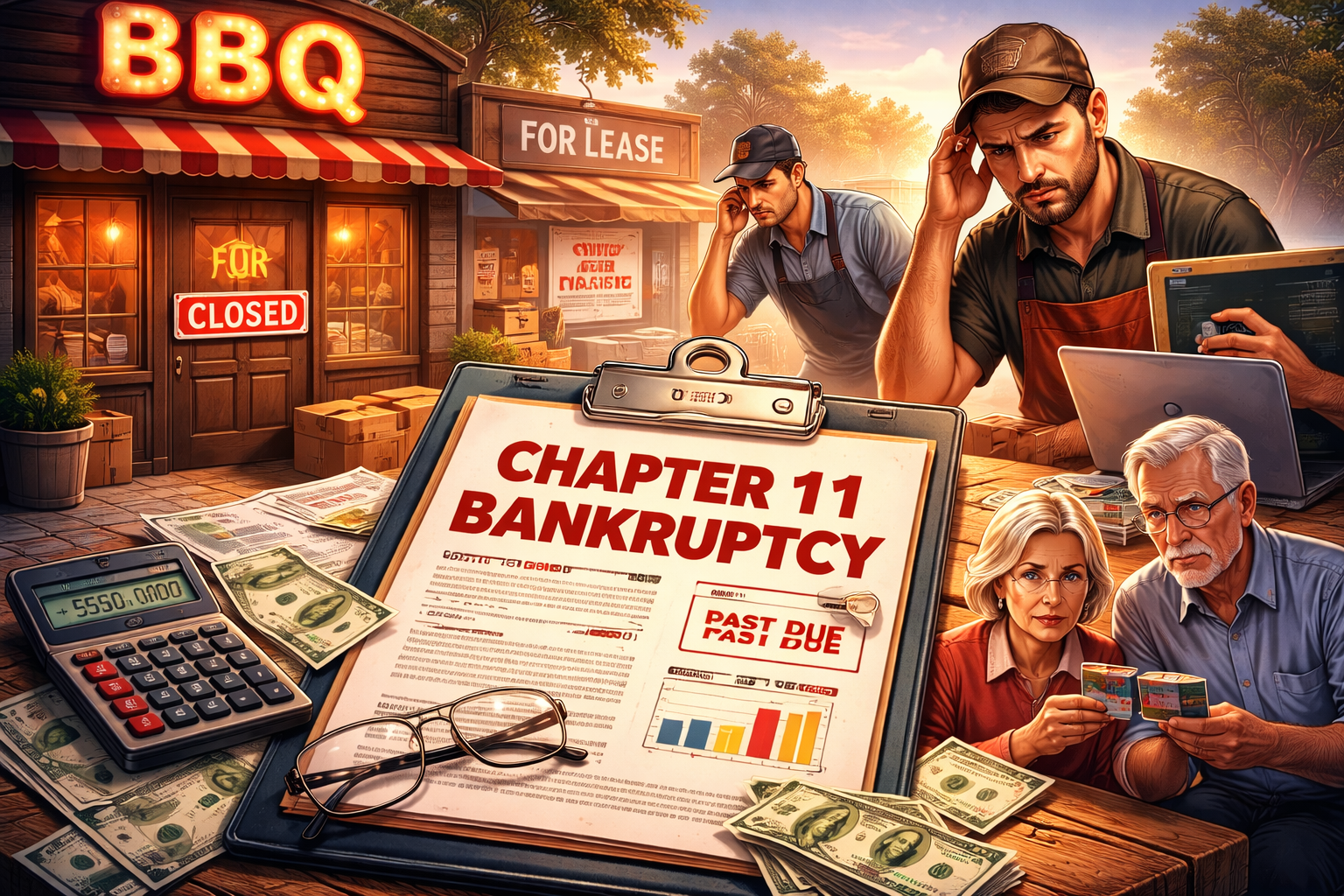
If you’ve searched for bbq chain chapter 11, chances are you’ve seen a headline about a familiar barbecue brand filing for bankruptcy and wondered, Is this the end? Or maybe you’re a franchise owner, investor, employee, or loyal customer trying to understand what Chapter 11 actually means for a barbecue restaurant chain you care about.
The truth is, Chapter 11 isn’t always a death sentence. In fact, in the restaurant world—especially for BBQ chains—it’s often a strategic reset. Some brands come out leaner, smarter, and more profitable. Others don’t survive the fire.
In this deep-dive guide, we’re going to unpack the reality behind a bbq chain Chapter 11 filing in plain English. You’ll learn why barbecue chains are uniquely vulnerable, how Chapter 11 works step by step, what it means for franchisees and customers, and how to spot whether a brand is likely to rebound or fade away.
This article is written from a real-world, operator-minded perspective—not legal jargon, not sensational headlines. By the end, you’ll understand the business mechanics behind these filings and know exactly what signals matter most.
BBQ Chain Chapter 11 Explained in Simple Terms
When people hear “bankruptcy,” they often picture locked doors and liquidation sales. But Chapter 11 bankruptcy is fundamentally different. For a BBQ chain, Chapter 11 is more like hitting pause, renegotiating the rules, and then pressing play again.
At its core, a bbq chain Chapter 11 filing allows the company to keep restaurants open while it restructures debt, leases, and operations under court supervision. Brisket still gets smoked. Servers still show up. Customers still eat ribs on Friday night.
Think of it like a pitmaster realizing mid-cook that the fire is running too hot. Instead of throwing out the meat, they adjust airflow, move the brisket, and salvage the cook. Chapter 11 gives a struggling BBQ chain that same opportunity to rebalance.
For barbecue brands, Chapter 11 usually involves:
- Renegotiating expensive long-term leases
- Closing underperforming locations
- Reducing corporate overhead
- Reworking franchise agreements
- Restructuring high-interest debt
What’s critical to understand is that Chapter 11 is often filed before total collapse. Smart leadership uses it proactively when cash flow tightens but the brand still has value.
Why BBQ Chains Are Especially Vulnerable to Chapter 11
Barbecue restaurants occupy a unique—and risky—space in the restaurant industry. While BBQ has passionate fans and strong regional loyalty, the business model is unforgiving when costs spike or demand softens.
First, barbecue is labor- and time-intensive. Smoking meat isn’t fast casual assembly-line cooking. It requires trained pitmasters, long prep times, and significant food waste if demand forecasting is off. When inflation hits beef, pork, or wood supply, margins get crushed fast.
Second, BBQ chains often expand aggressively. Many popular brands grew quickly through franchising, assuming consistent foot traffic and stable costs. When reality hits—rising rents, higher wages, and uneven franchise execution—the financial model starts to wobble.
Third, BBQ concepts tend to skew toward large footprints. Bigger dining rooms, smokers, storage space, and parking all mean higher fixed costs. In a downturn, those costs don’t shrink just because fewer customers walk through the door.
We’ve seen well-known BBQ brands like Famous Dave’s and Dickey’s Barbecue Pit struggle at different points—not because people stopped loving barbecue, but because their cost structures outpaced revenue realities.
The Real Reasons BBQ Chains File for Chapter 11
A bbq chain Chapter 11 filing rarely comes from a single bad decision. It’s usually death by a thousand cuts—or at least the threat of it.
One common trigger is overexpansion. Chains sign dozens of leases during boom years, locking themselves into high rents. When sales flatten or decline, those leases become financial anchors dragging the entire system down.
Another major factor is franchise tension. Franchisees may struggle with food costs, labor shortages, or inconsistent corporate support. When franchise closures accelerate, royalty revenue drops, creating a domino effect at the corporate level.
Supply chain volatility also plays a role. Barbecue relies heavily on commodities like beef brisket, ribs, and chicken. Sharp price increases—combined with customers’ resistance to higher menu prices—squeeze margins brutally.
Finally, leadership misalignment can accelerate decline. Outdated menus, poor marketing, or failure to adapt to delivery and off-premise dining can leave BBQ chains behind more nimble competitors.
Chapter 11 becomes the last structured opportunity to fix these issues before lenders force liquidation.
What Happens During a BBQ Chain Chapter 11 Filing (Step by Step)
Understanding the process removes much of the fear. Here’s how a typical bbq chain Chapter 11 unfolds in practice.
The company first files a petition in bankruptcy court, outlining assets, liabilities, and a plan to reorganize. This filing triggers an automatic stay, which temporarily halts creditor collection efforts. That breathing room is critical.
Next comes operational triage. Management evaluates which locations are profitable, marginal, or draining cash. Underperforming restaurants may close quickly, while strong units receive more support.
Lease negotiations follow. Chapter 11 gives chains leverage to renegotiate rents or exit bad leases entirely—something nearly impossible outside bankruptcy.
Debt restructuring is the next major phase. High-interest loans may be refinanced, payment timelines extended, or portions of debt converted into equity.
Finally, the chain submits a reorganization plan to the court. Creditors vote, the judge approves, and the company exits Chapter 11—ideally with a cleaner balance sheet and a realistic growth plan.
Throughout this process, restaurants typically remain open. Customers may not even notice anything beyond a quieter dining room or a trimmed menu.
Who Benefits From a BBQ Chain Chapter 11—and Who Doesn’t
Chapter 11 creates winners and losers, and it’s important to be honest about both.
Corporate entities often benefit the most. They shed unmanageable debt, escape bad leases, and reset operations. If executed well, they emerge stronger.
Franchisees can benefit too—if the restructuring addresses systemic issues. Reduced royalties, streamlined menus, or better supply contracts can dramatically improve unit economics.
Customers usually see little downside. Gift cards are often honored, locations stay open, and quality may even improve as focus returns to core offerings.
Creditors, however, may take losses. Landlords, suppliers, and lenders often receive less than they’re owed. Employees at closed locations also bear the human cost, which is why Chapter 11 is never painless—even when successful.
Tools, Data, and Expert Resources for Evaluating BBQ Chain Bankruptcies
If you’re tracking a bbq chain Chapter 11 from an investment or business perspective, data matters. Court filings reveal more truth than press releases.
PACER (Public Access to Court Electronic Records) provides bankruptcy documents for those who want the raw details. Industry publications like Restaurant Business Online often break down filings in plain language.
Financial modeling tools such as ProfitSword or MarginEdge (used internally by many chains) help operators analyze food and labor costs—often the root causes behind Chapter 11 filings.
Free resources like SEC filings (for public companies) can also reveal long-term warning signs well before bankruptcy becomes public.
Common Mistakes BBQ Chains Make During Chapter 11—and How to Avoid Them
The biggest mistake is treating Chapter 11 as a branding problem instead of a business problem. No amount of PR can fix broken unit economics.
Another frequent error is closing too few locations. Chains often cling to marginal restaurants out of optimism, only to drain resources needed for recovery.
Ignoring franchisee voices is another fatal misstep. Successful reorganizations actively involve franchise operators in redesigning the model.
Finally, some chains exit Chapter 11 without meaningful change—same menu, same costs, same leadership mindset. That almost guarantees a second filing.
Real-World Outcomes: Do BBQ Chains Actually Recover After Chapter 11?
Some do. Some don’t.
Successful recoveries typically share a few traits: disciplined footprint reduction, menu simplification, cost transparency, and leadership accountability. These brands refocus on what made them popular in the first place—great barbecue, consistent execution, and community connection.
Failures often stem from denial. If leadership believes Chapter 11 alone is the fix, without changing behavior, the clock just resets.
The lesson is clear: Chapter 11 is a tool, not a cure.
Conclusion: What BBQ Chain Chapter 11 Really Signals
A bbq chain Chapter 11 filing isn’t the end of the road—it’s a crossroads. It signals that something fundamental in the business model needs fixing, but it also offers a rare second chance.
For customers, it usually means business as usual. For franchisees and investors, it’s a moment to analyze deeply, ask hard questions, and watch actions—not headlines.
If you understand the mechanics, warning signs, and recovery patterns, Chapter 11 stops being scary and starts being informative. It tells a story about the past—and hints strongly at the future.
FAQs
No. Chapter 11 allows a BBQ chain to keep operating while restructuring debt and operations.
Usually not. Some underperforming locations may close, but many stay open throughout the process.
Often yes, but policies vary. Most chains honor them to maintain customer trust.
High food costs, labor intensity, and large footprints make BBQ especially vulnerable.
Yes, though multiple filings often signal deeper structural problems.