
If you’ve ever asked who started AI, you’re not alone—and you’re asking the right question at exactly the right time.
Artificial intelligence is no longer a futuristic concept tucked away in research labs. It’s writing emails, diagnosing diseases, recommending what you watch, helping businesses make decisions, and reshaping entire industries. Yet behind all this power lies a surprisingly human story—one that spans decades of curiosity, failed experiments, philosophical debates, and a few stubborn visionaries who refused to let the idea die.
This article is for readers who want more than a one-line answer. If you’re a student trying to understand AI’s roots, a founder building with AI tools, a marketer or content creator navigating an AI-driven world, or simply someone curious about how we got here, this guide is designed for you.
We’ll unpack who started AI, why that question is more complex than it sounds, and how a chain of thinkers—mathematicians, computer scientists, psychologists, and engineers—collectively built what we now call artificial intelligence. You’ll walk away with practical context, historical clarity, and a deeper appreciation for why modern AI works the way it does.
This isn’t a dry history lesson. Think of it as sitting across the table from someone who’s spent years studying, using, and occasionally breaking AI systems—and wants to tell you the real story.
Who Started AI? Understanding the Question Before Answering It
Before naming names, we need to slow down and unpack the question itself. When people ask who started AI, they’re usually hoping for a single inventor, a clear “founder,” or a moment when artificial intelligence was officially born.
The reality is more nuanced—and more interesting.
AI didn’t start the way the light bulb or the telephone did. It emerged gradually, through ideas rather than products, through debates rather than blueprints. It’s closer to asking who started modern medicine or who started the internet. You can’t point to just one person without oversimplifying the story.
At its core, artificial intelligence is about one idea: can machines think, reason, or learn in ways that resemble human intelligence? That question existed long before computers did. Philosophers were wrestling with it centuries ago, imagining mechanical minds and artificial beings in myths, stories, and early logic systems.
Once digital computers appeared in the mid-20th century, that philosophical curiosity collided with technical possibility. Suddenly, intelligence wasn’t just something to talk about—it was something people could try to build.
So when we ask who started AI, we’re really asking several questions at once:
Who first imagined thinking machines?
Who created the theoretical foundation?
Who coined the term “artificial intelligence”?
Who built the first working systems?
Each of these has a different answer. And understanding that layered origin helps explain why AI today is both incredibly powerful and deeply imperfect.
The Philosophical Roots: AI Before Computers Even Existed
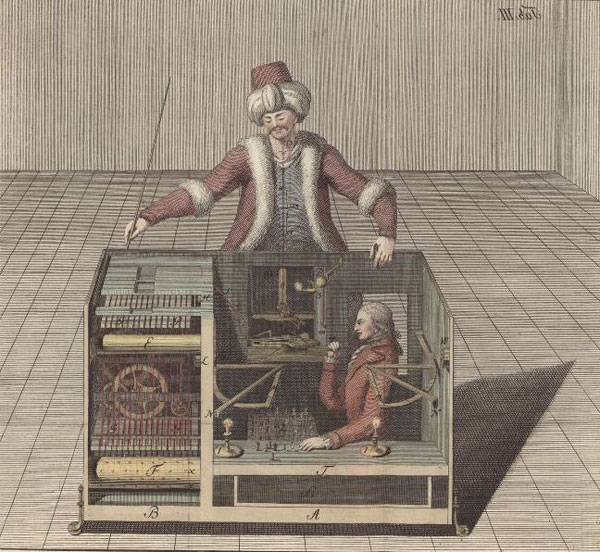


Long before silicon chips and neural networks, humans were obsessed with the idea of artificial intelligence—even if they didn’t call it that.
Ancient Greek philosophers debated whether reasoning followed universal rules that could be replicated. Aristotle formalized logic into structured syllogisms, laying groundwork that would later influence computational reasoning. If reasoning could be reduced to rules, then in theory, something non-human could follow those rules too.
Fast forward to the 17th century, and thinkers like René Descartes and Gottfried Wilhelm Leibniz pushed these ideas further. Leibniz, in particular, imagined a “calculus of reasoning,” where disputes could be settled by calculation rather than argument. His famous quote—“Let us calculate”—sounds eerily like a mission statement for modern AI.
These ideas mattered because they reframed intelligence as something mechanical and rule-based rather than mystical. That shift was essential. Without it, no one would have seriously attempted to build an intelligent machine.
By the 19th century, Charles Babbage and Ada Lovelace were designing mechanical computing machines. Lovelace even speculated that such machines might one day compose music or create art—an astonishingly accurate prediction of today’s generative AI.
Still, all of this was theoretical. The missing ingredient was a machine powerful and flexible enough to test these ideas.
That machine arrived in the 20th century.
Alan Turing and the Foundational Question of Machine Intelligence
If one name consistently appears when discussing who started AI, it’s Alan Turing—and for good reason.
Turing wasn’t just a mathematician; he was a thinker who asked uncomfortable, forward-looking questions. In 1950, he published a paper titled “Computing Machinery and Intelligence,” which didn’t describe how to build AI, but asked something far more provocative: Can machines think?
Rather than getting stuck in definitions, Turing proposed a practical test—now famously known as the Turing Test. If a machine could carry on a conversation indistinguishable from that of a human, he argued, it should be considered intelligent.
This idea did two critical things.
First, it reframed intelligence as behavior rather than inner experience. We don’t need to know how a machine “feels”; we judge intelligence by what it can do. That principle still guides AI evaluation today.
Second, it gave researchers a concrete goal. Instead of abstract debates, they could now try to build systems that behaved intelligently.
Turing didn’t create AI systems himself in the modern sense, but he created the intellectual permission to try. He made it respectable—scientific, even—to believe that machines could one day exhibit intelligence.
Without Turing, AI might have remained a fringe philosophical curiosity for decades longer.
The Dartmouth Conference: When AI Got Its Name
While Alan Turing laid the conceptual groundwork, the official birth of AI as a field happened in the summer of 1956 at a small academic gathering known as the Dartmouth Conference.
This is the moment most historians point to when answering who started AI.
The conference proposal boldly claimed that “every aspect of learning or any other feature of intelligence can in principle be so precisely described that a machine can be made to simulate it.” That confidence might seem naive today, but it was revolutionary at the time.
The term “artificial intelligence” itself was coined by John McCarthy, a young but influential researcher who believed machines could reason symbolically, much like humans manipulate concepts and language.
Alongside McCarthy were other foundational figures, including Marvin Minsky, Claude Shannon, and Herbert Simon.
What made this moment so important wasn’t any single breakthrough, but the declaration of intent. AI was no longer a scattered set of ideas—it was a defined research field with a name, a mission, and funding ambitions.
In many ways, the Dartmouth Conference was like a startup launch. The product didn’t exist yet, but the vision was clear, and the belief was contagious.
Early AI Systems: Big Promises and Early Successes
The years following the Dartmouth Conference were filled with optimism. Researchers genuinely believed human-level AI was just a few decades—or even years—away.
Early systems seemed to justify that confidence. Programs like Logic Theorist, developed by Herbert Simon and Allen Newell, could prove mathematical theorems. ELIZA, an early natural language program, simulated conversation well enough to emotionally engage users, despite its simplicity.
These systems worked using symbolic AI, also known as “good old-fashioned AI.” The idea was straightforward: encode knowledge as rules and symbols, then let machines manipulate them logically.
In narrow domains, this approach worked impressively well. Machines could play chess, solve logic puzzles, and follow structured reasoning paths.
But cracks soon appeared.
Symbolic systems struggled with ambiguity, uncertainty, and real-world messiness. They didn’t learn well from experience and required extensive manual programming. Teaching a machine “common sense” turned out to be far harder than anticipated.
Still, these early successes mattered. They proved AI wasn’t just theoretical—it was possible, at least in limited forms.
AI Winters: When Progress Stalled and Belief Faded
One of the most misunderstood parts of AI history—and a crucial piece of understanding who started AI—is the role of failure.
After the early hype, reality hit hard. Funding agencies grew impatient. Promised breakthroughs didn’t materialize. Computers weren’t powerful enough, data was scarce, and symbolic approaches hit their limits.
This led to periods known as AI winters, where funding dried up and interest waned. Researchers struggled to justify their work. Entire labs shut down or pivoted to safer topics.
From the outside, it looked like AI had failed.
From the inside, something more subtle was happening. The field was learning its limitations. Researchers began exploring alternative approaches, including probabilistic models and early forms of machine learning.
These winters were painful, but necessary. They forced humility and pushed the field toward methods that could scale with data and computing power.
AI didn’t die—it went underground, waiting for better tools.
The Shift to Machine Learning and Neural Networks
While symbolic AI dominated early decades, another idea was quietly gaining traction: machines that learn from data rather than rules.
Inspired loosely by the human brain, neural networks attempted to model intelligence through interconnected nodes that adjusted based on experience. Early versions existed as far back as the 1950s, but they were limited by hardware and theory.
As computing power increased and datasets exploded in size, these learning-based approaches began to outperform rule-based systems. Instead of explicitly programming intelligence, researchers trained models on examples.
This shift marked a philosophical turning point. Intelligence wasn’t something you fully designed—it was something that emerged through learning.
By the 2010s, deep learning transformed fields like computer vision, speech recognition, and natural language processing. The AI boom we’re living through now is built on this foundation.
Understanding this transition helps clarify why asking who started AI doesn’t have a simple answer. The people who named AI aren’t the same people who made it practical at scale.
Modern AI and the Legacy of Its Founders
Today’s AI systems—large language models, recommendation engines, autonomous systems—look nothing like the early programs of the 1950s. Yet they’re deeply connected to those origins.
The questions Alan Turing asked still guide evaluation.
The ambition of John McCarthy still defines the field’s scope.
The optimism—and caution—earned through AI winters still shapes funding and ethics debates.
Modern AI stands on a layered foundation built by many hands across generations.
When people ask who started AI, the most honest answer is this: AI was started by a community, not a single inventor. It evolved through shared ideas, public debates, and iterative failures.
That collective origin is why AI is so adaptable—and why it keeps reinventing itself.
Benefits and Real-World Use Cases Rooted in AI’s Origins
Understanding who started AI isn’t just historical trivia—it has practical implications for how we use AI today.
The symbolic roots explain why some systems excel at logic and structure but struggle with creativity. The learning-based evolution explains why modern AI needs vast amounts of data and can inherit human biases.
Industries benefiting from AI today include healthcare, finance, marketing, logistics, and education. In each case, the underlying approaches trace back to early decisions made decades ago.
Before AI, processes were manual, slow, and reactive. After AI, they’re predictive, automated, and scalable.
Knowing the origins helps users choose the right tools, set realistic expectations, and avoid overhyping capabilities.
A Practical Guide to Thinking About AI the Right Way
If you’re working with AI—whether as a user, builder, or decision-maker—here’s the practical takeaway from its origins.
First, understand the difference between narrow intelligence and general intelligence. AI today excels at specific tasks, not human-like reasoning.
Second, respect data. Learning-based AI is only as good as the data it’s trained on.
Third, avoid magical thinking. AI didn’t emerge overnight, and it won’t replace human judgment instantly.
Finally, stay curious. The same curiosity that drove early pioneers is what keeps the field moving forward.
Tools, Comparisons, and Expert Perspective
Modern AI tools vary widely, from simple automation platforms to advanced generative models. Some are beginner-friendly, others require deep technical expertise.
Free tools often offer accessibility but limited control. Paid tools provide scalability and customization but demand responsible use.
The best approach is alignment: match the tool to the problem, not the hype.
From experience, the most successful AI implementations are boring on the surface but powerful underneath. They solve real problems quietly and reliably.
Common Mistakes People Make When Learning About AI’s Origins
One common mistake is oversimplification—crediting one person or company with “inventing” AI. This erases decades of collaborative work.
Another is assuming early AI was primitive or naive. In reality, many early ideas were brilliant but constrained by technology.
A third mistake is ignoring failure. AI winters weren’t wasted time; they were critical learning periods.
The fix is context. Always view AI history as a long arc, not a single breakthrough.
Conclusion: So, Who Really Started AI?
So—who started AI?
The truest answer is that AI was started by a chain of thinkers, each building on the last. Philosophers imagined it. Alan Turing legitimized it. John McCarthy named it. Early researchers tested it. Later generations refined it.
AI is a human story—one of curiosity, ambition, failure, and persistence.
If you’re using AI today, you’re participating in that story. And if history is any guide, the most important chapters are still being written.
FAQs
John McCarthy is often called the father of AI because he coined the term and helped establish the field.
No, but he laid the conceptual foundation and introduced the Turing Test, which shaped AI research.
AI as a formal field began in 1956 at the Dartmouth Conference.
AI evolved through collaborative research across decades rather than a single invention.
It had notable successes but also major limitations, leading to periods of reduced funding.