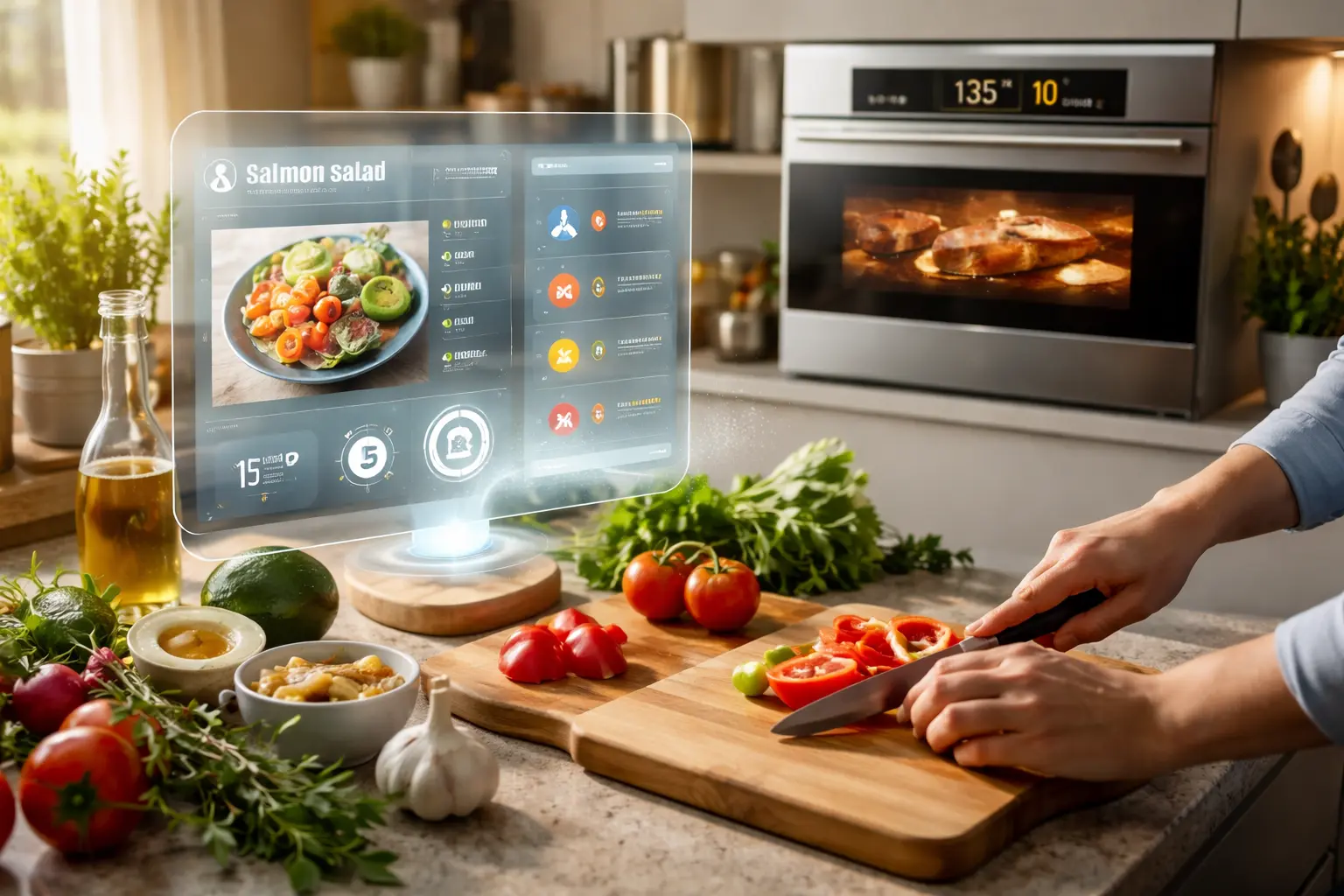
A few years ago, the idea of AI in the kitchen felt like marketing hype. Touchscreens on refrigerators. Voice assistants that could barely set a timer. “Smart” appliances that were smart in name only.
Fast forward to today, and something very real has shifted.
Kitchens are no longer just places where food gets prepared. They’ve become data-rich environments where patterns, preferences, waste, energy use, nutrition, and timing all intersect. And that’s exactly where kitchen AI thrives.
If you’ve ever:
- Stared into your fridge wondering what to cook
- Burned a meal because you got distracted
- Wasted groceries you forgot you had
- Tried (and failed) to eat healthier consistently
- Managed a busy household or commercial kitchen
…then kitchen AI isn’t a novelty. It’s a solution to everyday friction.
This guide is written for:
- Home cooks who want less stress and better meals
- Busy families juggling schedules and nutrition
- Smart-home adopters looking for real value
- Restaurant operators and food professionals
- Anyone curious about how AI is actually being used in kitchens today
We’ll move from beginner-friendly explanations to expert-level insights, without fluff, jargon, or sales hype. By the end, you’ll understand what kitchen AI really is, how it works in practice, which tools are worth your time, and where this space is heading next.
What Is Kitchen AI? A Clear, Practical Explanation (Beginner → Expert)
At its core, kitchen AI refers to the use of artificial intelligence technologies to assist, automate, optimize, or personalize tasks related to cooking, food management, and kitchen operations.
But that definition alone doesn’t do it justice.
A better way to understand kitchen AI is to think of it as a digital sous-chef—one that observes patterns, learns preferences, anticipates needs, and improves outcomes over time.
The Simple Version (Beginner View)
For beginners, kitchen AI usually shows up as:
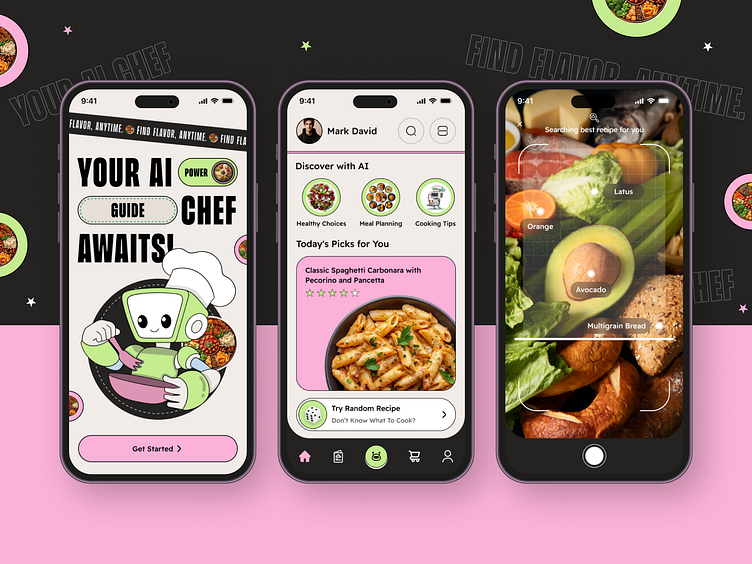
- Recipe recommendations based on what’s in your fridge
- Smart ovens that adjust temperature automatically
- Apps that plan meals around dietary goals
- Voice assistants that guide you through cooking
You interact with it casually, often without realizing AI is involved.
The Deeper Reality (Advanced View)
Under the hood, kitchen AI combines:
- Machine learning (learning from your habits)
- Computer vision (recognizing food items)
- Natural language processing (understanding voice/text)
- Predictive analytics (anticipating needs)
- IoT integration (connected appliances)
Together, these systems:
- Learn what you like to eat
- Understand how you cook
- Track food freshness and usage
- Optimize timing, energy, and portions
- Reduce waste and mistakes
This is why kitchen AI feels less like software and more like experience-driven intelligence.
What Kitchen AI Is Not
Let’s clear up a few misconceptions:
- It’s not just “smart appliances”
- It’s not limited to expensive luxury kitchens
- It’s not replacing human creativity in cooking
- It’s not one single product or platform
Kitchen AI is an ecosystem, not a gadget.
Why Kitchen AI Is Exploding Right Now (And Not Earlier)
Kitchen AI isn’t new. What’s new is timing.
Three things converged recently:
1. Data Became Available
Smartphones, grocery apps, wearables, and connected appliances now generate usable data.
2. AI Became Practical
AI models can now run efficiently on consumer devices and cloud platforms.
3. Consumer Pain Reached a Breaking Point
People are busier, food is more expensive, and health awareness is higher than ever.
The result? AI moved from novelty to necessity.
Real Benefits of Kitchen AI (With Before vs After Scenarios)
Kitchen AI isn’t about “cool features.” It’s about measurable improvements.
1. Time Savings
Before kitchen AI:
- Manual meal planning
- Constant decision fatigue
- Rechecking recipes mid-cook
After kitchen AI:
- Auto-generated weekly meal plans
- Step-by-step adaptive guidance
- Timers synced across appliances
Even saving 20–30 minutes per day adds up fast.
2. Reduced Food Waste
Before:
- Forgotten leftovers
- Expired produce
- Overbuying groceries
After:
- Inventory tracking
- Expiry reminders
- Recipe suggestions using aging items
This alone can save households hundreds per year.
3. Health & Nutrition Optimization
Kitchen AI can:
- Adjust recipes to dietary goals
- Track macro/micronutrients
- Suggest healthier substitutions
- Flag allergens automatically
It removes guesswork without killing enjoyment.
4. Better Cooking Outcomes
Smart ovens and AI assistants:
- Adjust heat dynamically
- Prevent overcooking
- Adapt to portion size
- Compensate for mistakes in real time
This is especially valuable for beginners.
Where Kitchen AI Is Used in the Real World
Kitchen AI isn’t limited to homes.
Home Kitchens
- Meal planning
- Smart cooking guidance
- Grocery management
- Family nutrition tracking
Restaurants & Commercial Kitchens
- Demand forecasting
- Inventory optimization
- Waste reduction
- Consistency across shifts
Healthcare & Assisted Living
- Personalized diets
- Allergy prevention
- Portion control
- Staff efficiency
Food R&D and Test Kitchens
- Recipe experimentation
- Flavor optimization
- Nutritional modeling
The technology scales remarkably well.
Step-by-Step: How to Actually Use Kitchen AI (Without Overcomplicating)
Step 1: Identify Your Real Pain Point
Start with one goal:
- Save time
- Eat healthier
- Reduce waste
- Improve cooking consistency
Avoid trying to “AI everything” at once.
Step 2: Choose the Right Entry Point
Good starting options:
- AI meal-planning apps
- Smart cooking thermometers
- Recipe assistants with learning capability
Skip complex automation early on.
Step 3: Feed the System (Lightly)
Kitchen AI improves with:
- Preferences (likes/dislikes)
- Dietary goals
- Cooking skill level
You don’t need perfect data—just honest input.
Step 4: Trust, But Verify
Use AI suggestions as guidance, not gospel.
Taste, adjust, and give feedback.
Step 5: Expand Gradually
Once comfortable:
- Add inventory tracking
- Connect appliances
- Automate grocery lists
Kitchen AI works best when it grows with you.
Kitchen AI Tools: What Actually Works in Practice

AI Meal Planning Apps
Best for beginners and busy households.
Pros:
- Easy setup
- Immediate value
- Dietary customization
Cons:
- Limited creativity
- Dependent on accurate inputs
Best use case: Weekly planning and grocery efficiency.
Smart Ovens & Cooktops
Best for consistency and precision.
Pros:
- Automatic adjustments
- Fewer cooking errors
- Great for multitasking
Cons:
- Higher cost
- Learning curve
Best use case: Frequent home cooks.
AI Inventory & Waste Tracking
Often overlooked but incredibly powerful.
Pros:
- Saves money
- Reduces stress
- Improves sustainability
Cons:
- Requires initial setup
- Needs habit formation
Best use case: Families and meal preppers.
Voice & Vision-Based Assistants
Useful, but not essential.
Pros:
- Hands-free guidance
- Accessibility
Cons:
- Accuracy varies
- Can be distracting
Best used as a supplement, not a core system.
Common Kitchen AI Mistakes (And How to Avoid Them)
Mistake 1: Buying Hardware Before Solving a Problem
Fix: Start with software or planning tools.
Mistake 2: Expecting AI to Replace Skill
Fix: Treat AI as a coach, not a crutch.
Mistake 3: Over-Automating Too Fast
Fix: Build trust step by step.
Mistake 4: Ignoring Feedback Loops
Fix: Rate recipes, correct mistakes, refine preferences.
Mistake 5: Chasing Features Instead of Outcomes
Fix: Focus on results—time, taste, health.
What Most People Miss About Kitchen AI
The biggest overlooked factor? Behavior change.
Kitchen AI doesn’t work because it’s smart.
It works because it:
- Reduces friction
- Lowers decision fatigue
- Encourages consistency
The technology succeeds when it quietly supports better habits, not when it tries to impress.
The Future of Kitchen AI (What’s Coming Next)
Expect rapid growth in:
- Multimodal AI (voice + vision + context)
- Hyper-personalized nutrition
- Predictive grocery purchasing
- Energy-aware cooking optimization
The kitchen will become one of the most intelligent rooms in the home—not because of screens, but because of invisible assistance.
Conclusion: Why Kitchen AI Is Worth Taking Seriously
Kitchen AI isn’t about replacing tradition or creativity.
It’s about removing friction from everyday cooking.
Used well, it:
- Saves time without shortcuts
- Improves health without obsession
- Reduces waste without guilt
- Enhances skill without ego
Start small. Stay intentional. Let the technology adapt to you—not the other way around.
If you’re ready to cook smarter, not harder, kitchen AI is no longer optional. It’s simply the next evolution of how we feed ourselves well.
FAQs
Kitchen AI uses artificial intelligence to help plan meals, cook better, manage food, and reduce waste.
It can be free or low-cost at the software level. Hardware investments are optional.
Yes. In fact, beginners often benefit the most.
Absolutely. Many tools work with just a smartphone.
Most systems anonymize data, but privacy settings should always be reviewed.