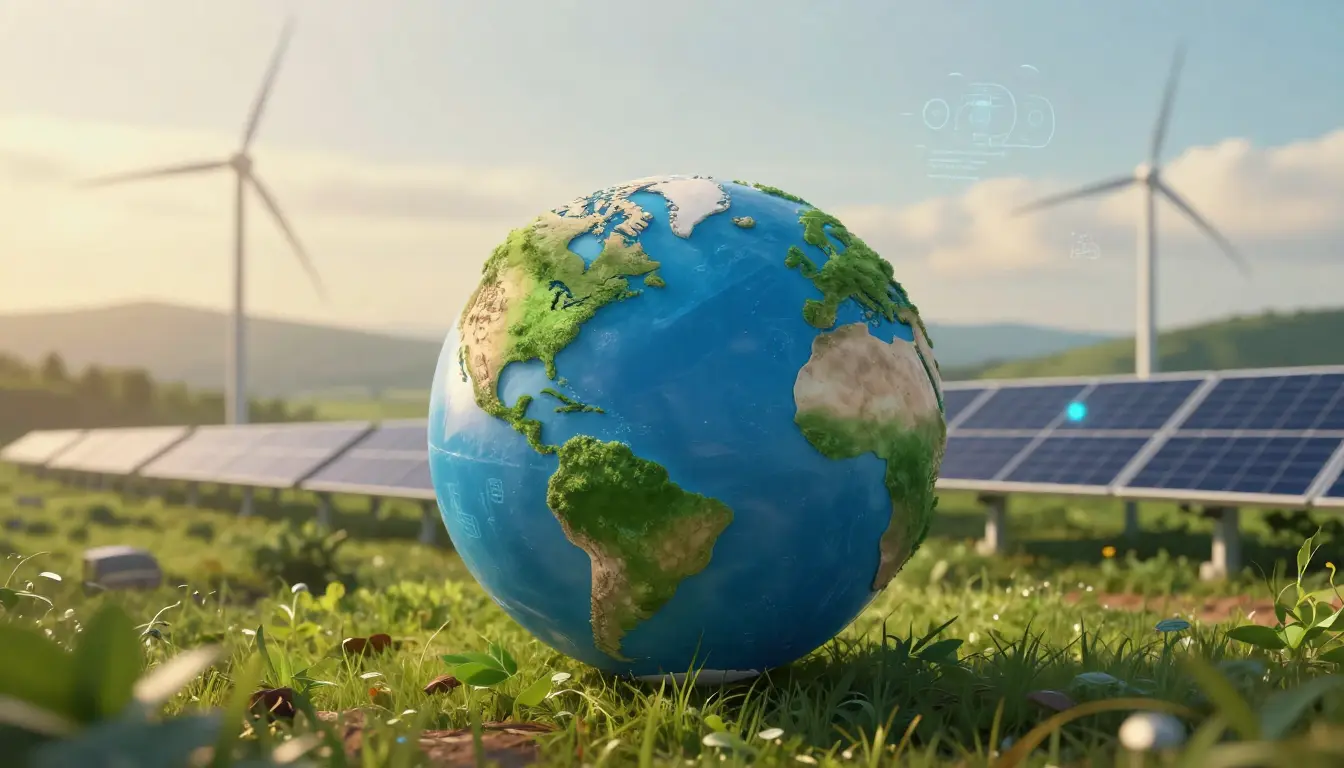
If you’ve ever looked at the weather app on your phone and wondered how it predicts a heatwave days in advance, or if you’ve seen a solar-powered streetlight quietly glowing at night and thought, this feels like the future, you’re already experiencing environmental science and technology in action. This field sits at the crossroads of how the natural world works and how human innovation can either harm or heal it.
Environmental challenges today are no longer abstract ideas discussed only in classrooms or conferences. Rising temperatures, water scarcity, air pollution, plastic-filled oceans, and extreme weather events are realities affecting homes, health, food prices, and economies. Environmental science and technology exists because we can no longer afford to guess our way through these problems.
In this guide, I’ll walk you through what environmental science and technology really means, how it works in real life, why it matters now more than ever, and how it’s being applied—from satellite-based climate monitoring to clean energy systems and smart waste management. You’ll also learn practical frameworks, tools, and common mistakes to avoid if you’re a student, policymaker, business owner, or simply someone who wants to understand where the world is heading.
This isn’t a theoretical overview. It’s a grounded, real-world look at how science and technology are shaping a more sustainable future—and where we still need to do better.
Topic Explanation: What Environmental Science and Technology Really Means
At its core, environmental science and technology is about understanding the Earth and using that understanding to design smarter solutions. Environmental science studies ecosystems, climate systems, soil, water, air, biodiversity, and how human activity affects them. Environmental technology applies that knowledge to create tools, systems, and processes that reduce harm and restore balance.
Think of environmental science as the diagnosis and environmental technology as the treatment. A scientist may identify that a river is polluted with heavy metals. Technology then steps in with filtration systems, bioremediation techniques, or policy-backed monitoring tools to fix the problem.
This field draws from multiple disciplines—biology, chemistry, physics, data science, engineering, economics, and even behavioral science. For example, climate models rely on physics and computer science, while sustainable agriculture blends ecology with sensor technology and automation.
Organizations like United States Environmental Protection Agency, NASA, and World Health Organization play a crucial role in advancing research, monitoring environmental health, and guiding global standards. Their data and tools influence everything from air quality alerts to climate resilience planning.
Environmental science and technology is not about “saving the planet” in a vague sense. It’s about protecting human well-being while ensuring ecosystems can continue to function. Clean air, safe drinking water, fertile soil, and a stable climate are not luxuries—they are infrastructure.
Benefits and Use Cases: Where Environmental Science and Technology Makes a Real Difference
The impact of environmental science and technology shows up in places you might not immediately associate with “green innovation.” Hospitals rely on clean water systems. Cities depend on air-quality sensors. Farmers use satellite data to decide when to plant or irrigate.
One major benefit is risk reduction. Early-warning systems for floods, droughts, and wildfires use environmental data combined with predictive algorithms. These tools save lives and billions in economic losses. Another benefit is resource efficiency. Smart grids balance energy supply and demand, reducing waste and lowering costs.
In urban settings, environmental technology improves daily life through noise monitoring, traffic pollution tracking, and green building design. In rural areas, it supports sustainable farming through precision agriculture, soil health analysis, and water management systems.
Industries also rely on environmental science and technology to comply with regulations and improve efficiency. Manufacturing plants use emissions monitoring to reduce pollutants. Mining operations apply environmental impact assessments to protect surrounding ecosystems. Even the tech sector uses lifecycle analysis to reduce the environmental footprint of devices.
For individuals, the benefits show up as cleaner neighborhoods, safer food, better health outcomes, and more resilient communities. Environmental science and technology isn’t niche—it’s foundational.
Step-by-Step Guide: How Environmental Science and Technology Solutions Are Developed
Understanding how solutions are created helps demystify the field. Most successful environmental science and technology projects follow a structured process.
First comes problem identification. This involves collecting baseline data—air samples, water tests, satellite imagery, or biodiversity surveys. Without accurate data, solutions are guesswork.
Next is scientific analysis. Researchers identify patterns, causes, and thresholds. For example, determining whether pollution comes from industrial discharge, agriculture runoff, or urban waste.
Then comes technology selection or design. Engineers and scientists collaborate to choose existing tools or develop new ones. This could be a filtration membrane, AI-based monitoring system, or renewable energy installation.
After that, pilot testing is critical. Small-scale trials reveal flaws, costs, and unintended consequences. Many environmental technologies fail not because they don’t work, but because they aren’t tested in real-world conditions.
Finally, there is implementation and monitoring. Long-term data collection ensures the solution remains effective and adapts to changing conditions.
Best practices include involving local communities, integrating policy support, and planning for maintenance—not just installation.
Tools, Comparisons, and Recommendations
Environmental science and technology relies on a wide range of tools, from simple field kits to advanced digital platforms. Free tools often include open-access satellite data, basic water testing kits, and community science platforms. These are excellent for education, small projects, and early-stage assessments.
Paid tools typically offer higher precision, automation, and scalability. Examples include industrial-grade sensors, environmental modeling software, and enterprise sustainability platforms. While costly, they provide detailed insights and compliance support.
When choosing tools, it’s important to balance accuracy, cost, and usability. Overly complex systems can fail if users aren’t trained. Simpler tools, properly applied, often deliver better outcomes.
Expert recommendations usually emphasize interoperability—tools that can integrate data from multiple sources—and transparency, so results can be verified and trusted.
Common Mistakes and How to Fix Them
One of the most common mistakes in environmental science and technology projects is technology-first thinking. Installing advanced systems without understanding the underlying environmental problem leads to wasted resources. The fix is to start with science, not gadgets.
Another mistake is ignoring social and economic context. A water purification system that works in a lab may fail in a community without maintenance capacity. The solution is co-design—working with end users from the start.
Data misinterpretation is another frequent issue. Environmental data is complex and context-dependent. Training, peer review, and cross-validation help prevent wrong conclusions.
Finally, many projects fail due to lack of long-term monitoring. Environmental systems change over time. Continuous evaluation is not optional—it’s essential.
The Role of Policy, Education, and Innovation
Environmental science and technology does not operate in isolation. Policy frameworks determine what gets funded and enforced. Education builds the next generation of scientists, engineers, and informed citizens. Innovation pushes boundaries, but must be guided by ethics and evidence.
Countries that successfully integrate science, technology, and governance tend to show stronger environmental outcomes. International collaboration, data sharing, and standardized metrics are becoming increasingly important in a connected world.
Real-World Case Studies and Practical Insights
Consider climate monitoring satellites developed through collaborations between research institutions and agencies like NASA. These systems provide near-real-time data on deforestation, ice melt, and atmospheric composition. Policymakers use this data to design climate strategies, while businesses use it to assess risk.
Another example is wastewater treatment technology that recovers energy and nutrients instead of treating waste as a liability. This circular approach reduces pollution while generating value.
These successes share a common trait: they combine solid science, appropriate technology, and long-term commitment.
Conclusion
Environmental science and technology is not a distant, futuristic concept—it’s already shaping how we live, work, and plan for tomorrow. From clean energy and safe water to climate resilience and sustainable cities, this field provides the tools we need to face environmental challenges with clarity instead of fear.
The most powerful solutions emerge when science guides technology, communities are involved, and decisions are grounded in evidence. Whether you’re exploring this field professionally or simply trying to understand the systems that support modern life, one thing is clear: environmental science and technology is no longer optional. It’s essential.
If this topic sparked new questions or ideas, explore further, share your thoughts, or dive into a specific application that matters to you.
FAQs
It is the study of how natural systems work and the use of technology to protect, manage, and restore the environment.
Because environmental challenges now directly affect health, economies, and global stability, requiring evidence-based solutions.
No, it also includes water treatment, pollution monitoring, waste management, climate modeling, and ecosystem restoration.
Yes, it supports careers in research, engineering, data analysis, policy, and sustainable business.
By studying environmental science, engineering, data science, or related fields and gaining hands-on experience through projects.